NCN ignores serial (machine-style) review writing — the Manfred Mudelsee case
The case shows how NCN protected a foreign expert who submitted serially duplicated, near-machine-generated reviews for multiple grant applications in the GRIEG programme. Expert Manfred Mudelsee used identical text templates to evaluate different researchers, sometimes giving high marks and sometimes low marks using the same copied phrases. Despite formal notice, the NCN leadership chose to ignore the problem.
Despite NN's formal complaint to the Research Integrity Commission, NCN Director Zbigniew Błocki officially refused to investigate, claiming the expert's behavior did not constitute "scientific misconduct." The decision came on the same day Błocki was secretly preparing NCN's response to the NIK (Supreme Audit Office) audit that criticized NCN's control procedures.
Documents
- 1.
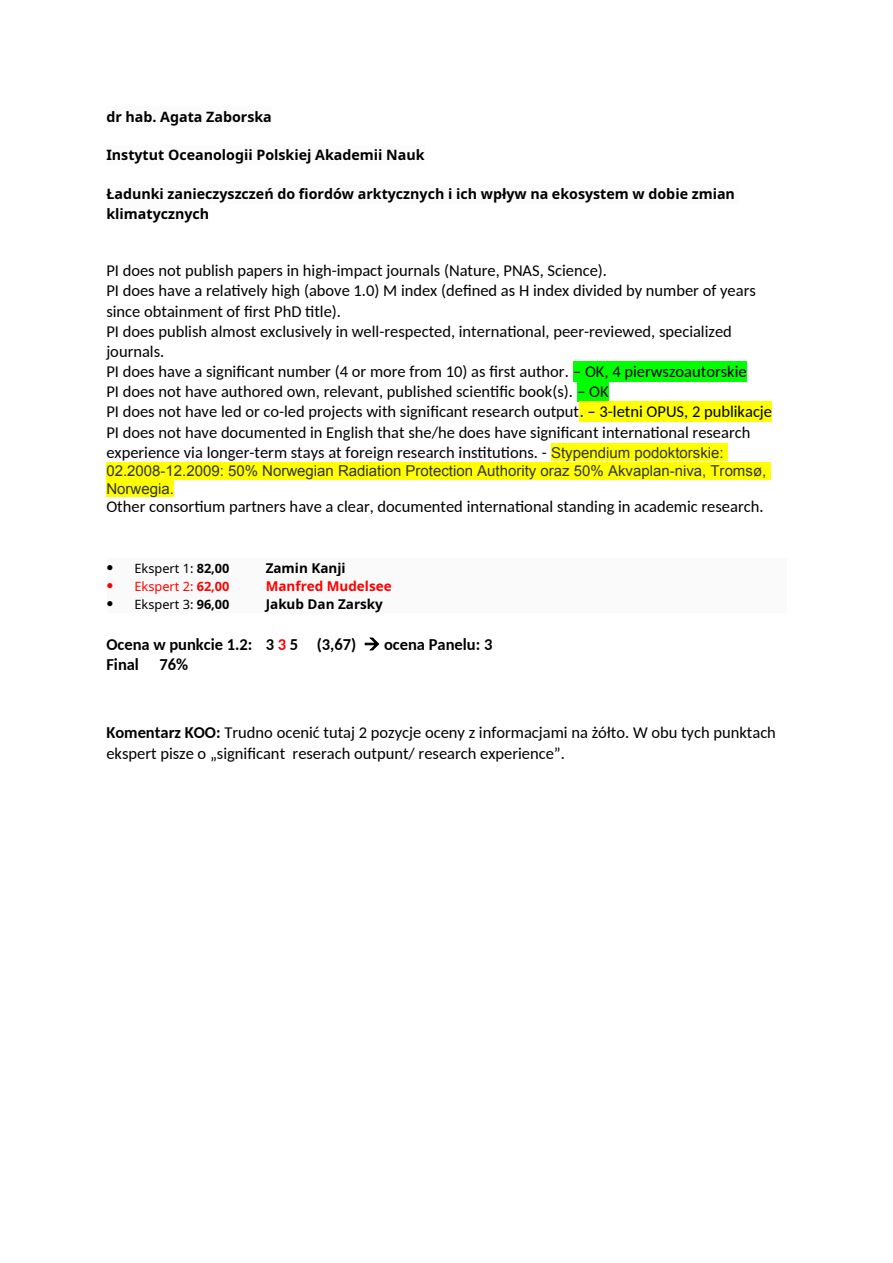 Analysis of Mudelsee's copy-paste reviews across multiple GRIEG applications (Zaborska, Grabiec, Bąk, Szymczycha)DOCX
 - 2.
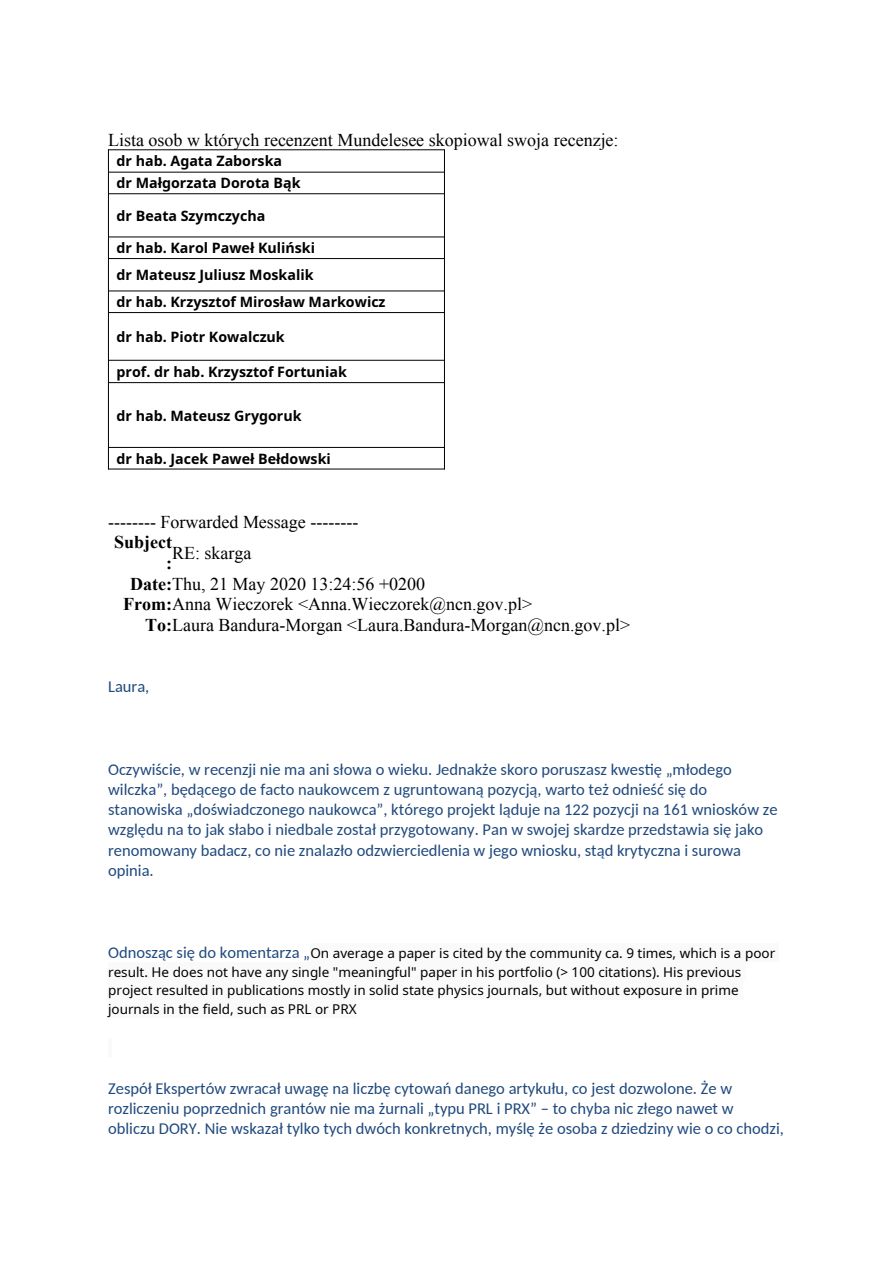 Internal NCN emails — NN raised concerns about improper expert reviews. Anna Wieczorek's dismissive response.DOCX
 - 3.
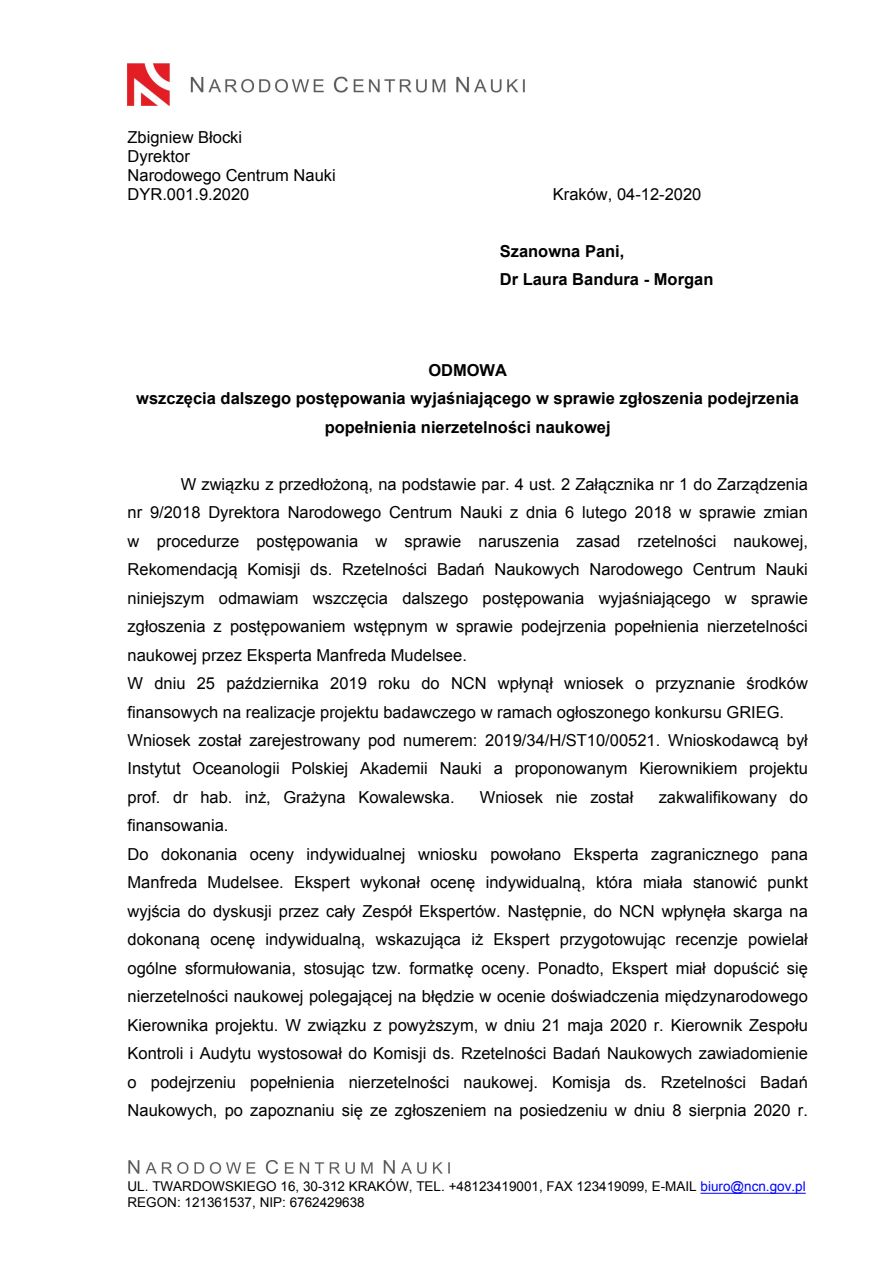 Official NCN document (signed by Błocki, 04.12.2020) REFUSING to investigate Mudelsee's misconductPDF
 - 4.
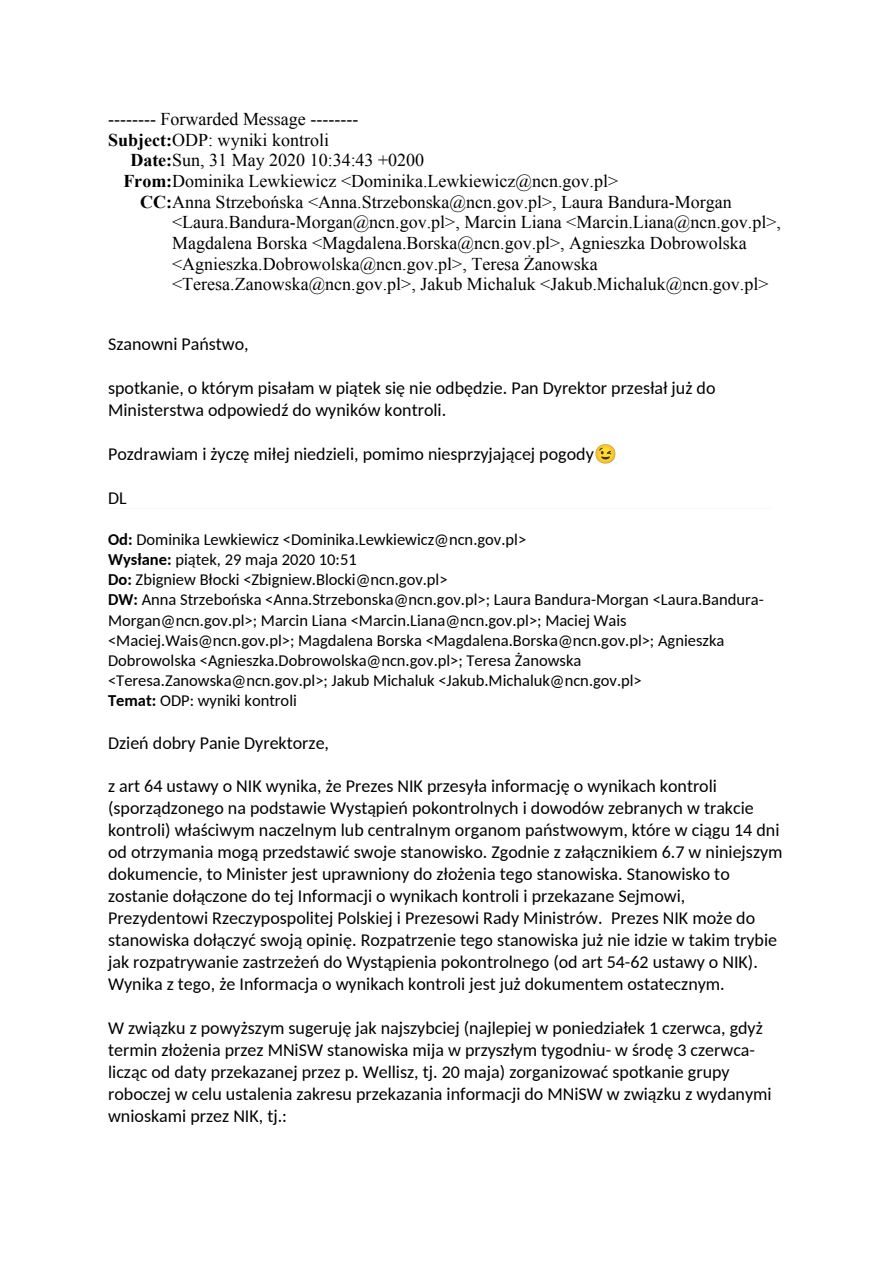 Błocki's secret reply to NIK control results, sent 29 May 2020 (same day as the alleged blackmail!)DOCX
 - 5.
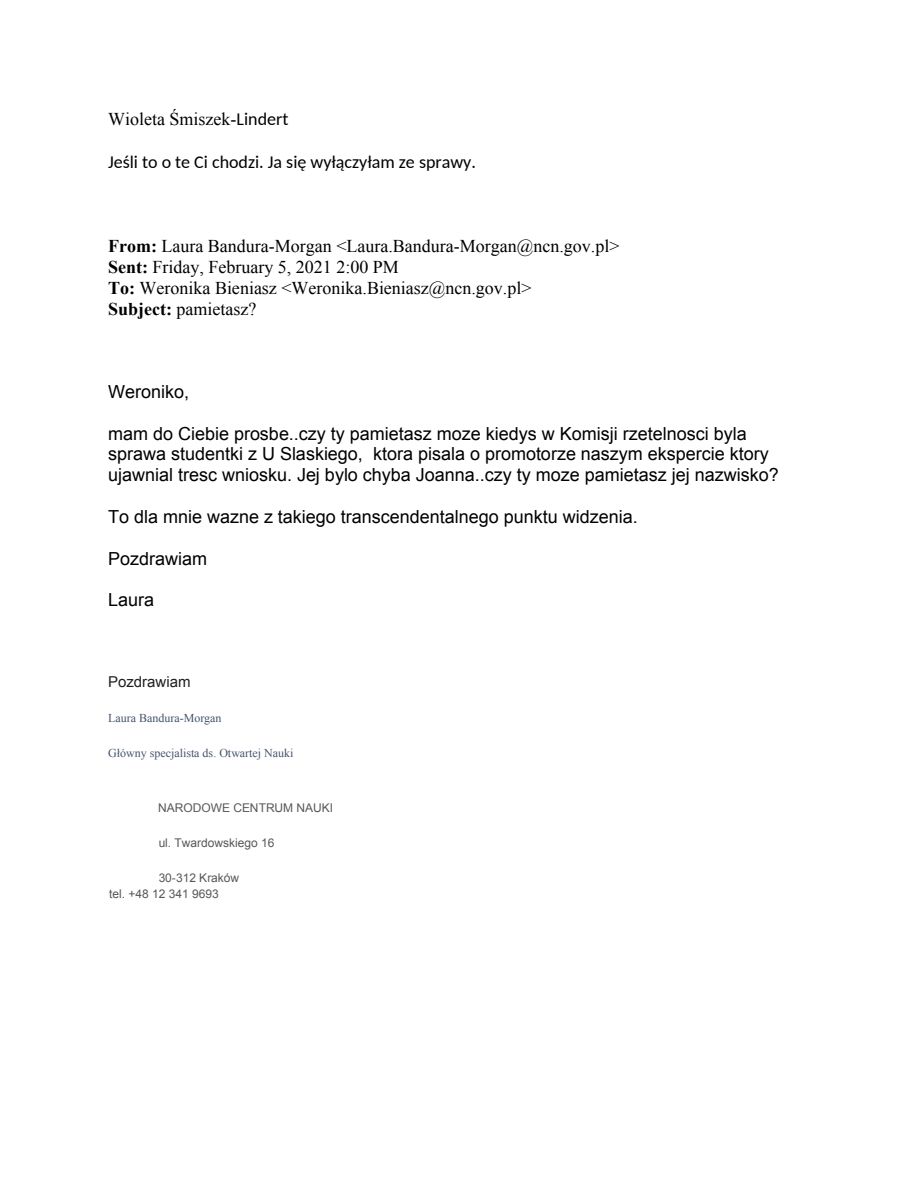 Internal NCN emails about NIK control — NN asks about a student who reported an expert disclosing grant contentsDOCX
 - 6.
 Full NIK audit report on NCN funding of basic researchPDF
 - 7.
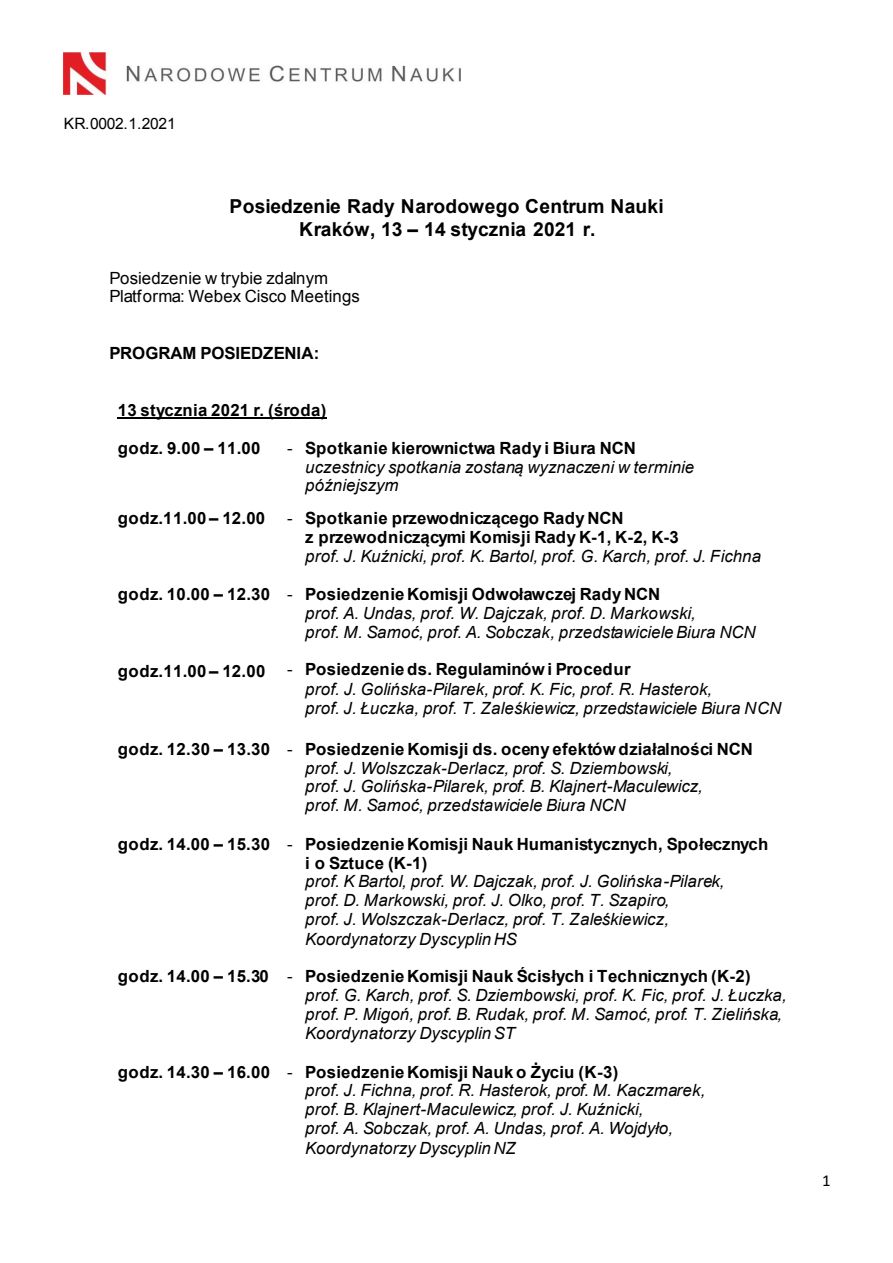 NCN Council meeting program, 13–14 January 2021 — appointing Commission for Research IntegrityPDF
 - 8.
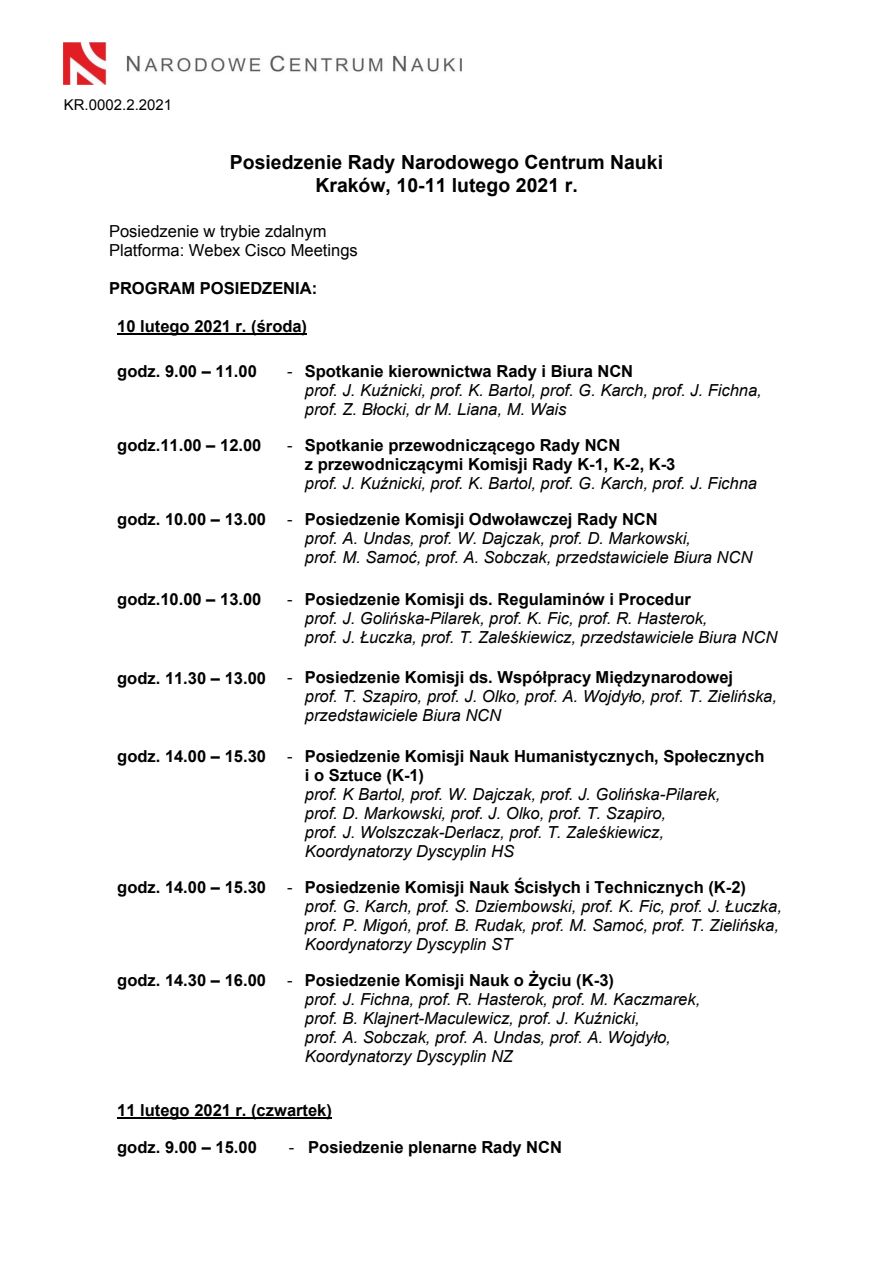 NCN Council meeting program, 10–11 February 2021PDF
An analysis of Mudelsee's reviews — identical text fragments used in reviews of multiple GRIEG applications (Zaborska, Grabiec, Bąk, Szymczycha).
A side-by-side comparison shows that the same sentences — sometimes with additions, sometimes unchanged — evaluate different researchers, undermining the independence of expert assessment.
Internal NCN emails — NN formally raises irregularities in Mudelsee's reviews.
Anna Wieczorek's reply is dismissive, showing that NCN internalised the problem rather than resolving it.
An official NCN letter signed by Director Błocki (4 December 2020) — REFUSAL to investigate the charge of disciplinary misconduct against Mudelsee.
The date of the letter is telling — it is issued on the same day Błocki is preparing NCN's secret reply to the NIK audit.
Director Błocki's secret reply to the NIK audit findings — sent on 29 May 2020, the same day as the ultimatum conveyed through NN.
The coincidence of dates is not accidental: NIK criticism and the Kilarski alleged blackmail are two lines of action from the same day.
Internal NCN emails about the NIK audit — NN asks about a student who reported an expert disclosing the contents of an application.
The emails show that NN tried formally to trigger an inquiry procedure but was brushed off by management.
The full NIK audit report on NCN's funding of basic research — a public audit document.
The report criticises NCN procedures; the Mudelsee case is a concrete instance of the problem described by the auditors.
Programme of the NCN Council meeting of 13–14 January 2021 — appointing the Commission for Research Integrity.
The commission is appointed after the Mudelsee case, but its work did not lead to an actual disciplinary proceeding.
Programme of the NCN Council meeting of 10–11 February 2021 — a further session against the backdrop of the Mudelsee case.
Comparing the agendas of both meetings shows that the integrity of reviews was not addressed substantively.